Digital transformation is taking place at an alarming rate throughout the GCC countries. With major cities such as Bahrain’s Manama serving as major financial centers and new smart cities emerging across the Gulf peninsula, the adoption of 5G networks, fiber broadband, and cloud services is changing the way we live and work. As the digital landscape continues to expand rapidly, so do the number of sophisticated threats to cyberspace; employees are not only at risk, but also any Critical National Infrastructure (CNI) systems on which our countries rely. Therefore, traditional evaluation criteria for recruiting personnel in Bahrain are no longer adequate to respond to this risk.
To HR executive and recruitment heads in Bahrain, the challenge is apparent. How do you discover talented individuals willing to defend against a highly dynamic enemy with very little regard for your organization’s success. Increasingly, the solution will be found in cyber security certifications. These credentials have transitioned from being a desirable addition to a résumé to becoming the industry’s standard for assessing trustworthiness and providing technical validation to today’s IT job applicants
The Growing Need for Cyber Security Certifications in Bahrain’s Digital Economy
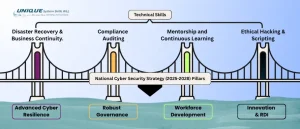
The launch of Bahrain’s National Cybersecurity Strategy (2025-2028) demonstrates the country’s determination to advance digitally and ensure national digital asset protection while stimulating economic advancement. With the country striving to be recognized as a regional hub for digital services and financial technology (FinTech), it cannot be stressed enough how valuable cyberspace security will be in supporting this commitment. Every new 5G tower and submarine cable adds a layer of complexity that requires specialized oversight.
In this context, cyber security certifications serve as a vital signal to employers. They demonstrate that a candidate possesses a standardized level of expertise that aligns with global best practices, such as NIST and ISO. In order for Bahrain to maintain its ability as a Tier 1 Global Cybersecurity Role Model by the International Telecommunications Union (ITU), there must be an available workforce that is not only knowledgeable in technology but also trained and certified to protect this technology. The need for validated skills is the leading reason recruiting priorities across the GCC are shifting.
Bridging the GCC Talent Gap with a Comprehensive Cyber Security Course
One of the core values of Bahrain’s National Strategy is “Sustainable Awareness and Workforce Development.” This strategy specifically outlines the need to develop a workforce that is skilled and adaptable enough to manage the increasing complexity of cyber risks. While this need continues to exist within the region, many organizations throughout the GCC continue to struggle with a large shortage of talented individuals; current estimates suggest that the Middle East will require an influx of certified professionals in order to secure the $1 Trillion Digital Economy. A structured cyber security course acts as the bridge between theoretical education and the practical, hands-on skills required by the industry.
Unique System Skills has the following specialized courses so that professionals and students can get skilled in this field.
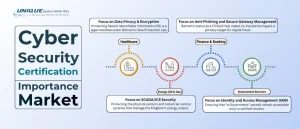
These courses are designed to transition learners into roles where they can immediately contribute to national security goals. By focusing on areas such as threat countering and incident response, a professional cybersecurity course ensures that the workforce is prepared to defend vital sectors like Energy, Finance, and Healthcare. According to the National Cyber Security Center (NCSC), identifying and mitigating risks within these Critical National Infrastructure (CNI) sectors is the cornerstone of the 2028 vision.
The link between a person’s education and the goals of the country creates an interconnected ecosystem so that the ability to earn cyber security certifications becomes the main indicator of an attendee’s professional status.
Why HR Executives Prioritize Candidates with Global Cyber Security Certifications
With respect to recruitment, CompTIA A+ and CompTIA Network+ credentials provide an ideal basis for recruiting staff, streamlining the recruiter’s ability to make prospective hires. The A+ certification is widely regarded as the entry level credential that demonstrates proficiency in troubleshooting and securing various operating systems in a diverse environment, including Windows, macOS, and Linux. Therefore, when a person with those cyber security certifications applies for a position as an HR manager at a Bahraini Bank or Government Agency, that would be assurance that the person possesses the basic technical support functions to operate in a modern office.
Building on this, Network+ focuses on the “heart of modern IT infrastructure”: networking. In a region where high-speed connectivity and 5G deployment are national priorities, having staff who understand TCP/IP, IP addressing, and routing is indispensable. These cyber security certifications provide a “gold standard” that allows recruiters to bypass the ambiguity of self-taught claims. Furthermore, the strategy’s emphasis on “Robust Cybersecurity Governance” means companies must comply with strict national standards; hiring individuals who have completed a cybersecurity course ensures the workforce is already familiar with the NIST and ISO frameworks.
Another significant advantage associated with certified professionals is that many are “ready for the industry,” which means they are immediately deployable, an advantage for any organization wanting to grow rapidly in the Gulf Cooperation Council (GCC).

Building a Resilient Infrastructure Through Professional Cybersecurity Course Training
Technical training is fundamentally about developing organizations’ abilities to respond and recover from an event. A well-rounded cybersecurity course will train employees on how to set up the technical deffence that keep critical systems functional. The training has a considerable amount of hands-on technical components for configuring various types of firewalls, working with Virtual Private Network (VPN) configurations, and managing Intrusion Detection and Prevention Systems (IDS/IPS). In the Gas, Electricity, and Oil (GEO) sectors, where the consequences of a single breach can be severe, this type of training is essential for maintaining the resiliency of the organization.
Establishing a “security-conscious culture” in an organization can be done by training all staff with a professional cyber security course. When all employees at all levels understand the importance of maintaining good cyber hygiene and detecting external threats, it reduces the organization’s overall risk profile. This proactive approach to protecting organizations will help them navigate the geopolitical and technological changes of our current environment.
Career Switcher Success: Navigating Your First Cyber Security Course
For individuals who are new to the IT industry and/or want to change their career path, the transition to a career in IT can appear overwhelming. However, there are many job opportunities for people in Bahrain that want to continue their education. In order to build a solid foundation for moving into the cybersecurity field, students or individuals changing careers should take the introductory cybersecurity course that will provide hands-on experience and classroom instruction.
The roadmap from general IT support to a highly skilled security analyst is clear and concise. By obtaining foundational cyber security certifications, individuals can prove their worth to potential employers and secure roles that offer both stability and growth. In the GCC, certified professionals frequently see a salary uplift of 20–30%, making the initial investment in a cyber security course highly rewarding in the long run.
Bahrain’s 2028 Vision: Scaling National Talent via Cyber Security Certifications
Looking ahead, Bahrain’s 2028 vision emphasis on Research, Development, and Innovation (RDI) is designed to foster a competitive cybersecurity ecosystem. The fifth pillar of the national strategy specifically targets the growth of a local cybersecurity industry that doesn’t just consume global technology but innovates within it. Achieving this requires a massive scale-up of national talent. By integrating cyber security certifications into the national educational curriculum and encouraging professional upskilling, the Kingdom is ensuring its citizens lead this digital charge.
This focus on talent development also includes a strong push for gender diversity and SME empowerment. Specialized programs are being designed to ensure even resource-constrained entities can access a high-quality cybersecurity course. As more individuals achieve these globally recognized cyber security certifications, Bahrain moves closer to its goal of being a global Tier-One role model, as recognized by the International Telecommunication Union (ITU). This cycle continues to repeat itself as the workforce becomes more proficient and more global technology companies are attracted to Bahrain. This will continue to create an increased demand for those who have invested in professional cyber security courses.
Future-Proofing Your Business: Investing in a Cybersecurity Course for Current Employees
Bottom-line for business Leaders is that the number one asset in preventing Cyber Security attacks is their workforce. By investing in a cybersecurity course for your current employee base, you are making a strategic investment that pays off in terms of improved security and greater employee retention. As an Industry, whether you are in retail, healthcare, or on the government side, corporate training & education programs can be tailored to meet your business’s specific risks associated with Cyber Security.
Upskilling your team with the latest cyber security certifications ensures that your organization stays ahead of emerging threats like AI-driven attacks and quantum computing vulnerabilities. It sends a powerful message to your clients and partners that you take their data security seriously. In an era where public trust is the currency of the digital landscape, being a “certified” secure business is the ultimate competitive advantage.
Conclusion
As we move toward 2028, the importance of cyber security certifications will only continue to grow. They are the key to unlocking the full potential of the GCC’s digital transformation, providing the trust, skills, and resilience needed to thrive in an interconnected world. Whether you are a student starting your journey or an executive leading a major corporation, the time to invest in a cyber security course is now. Together, we can build a secure and prosperous future for Bahrain and the entire region.